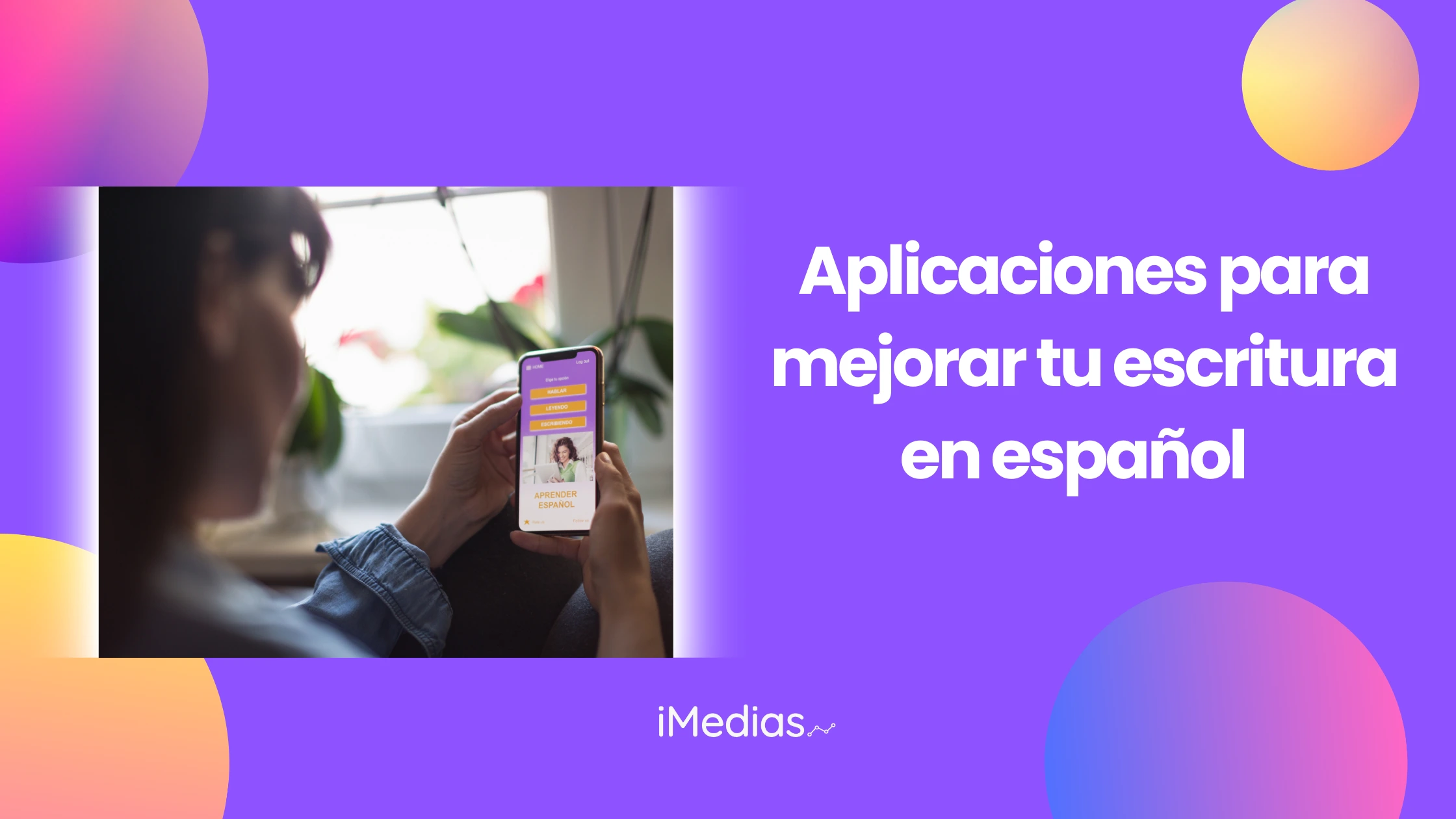
Apps to improve your Spanish writing
Advertisements
The Apps to improve your writing in Spanish They have become essential tools for writers, academics, marketing professionals, and anyone who wants to express themselves clearly.
According to Statista (2025), 68% of mobile users use grammar checkers at least once a week, and the market for these apps grew by 23% compared to 2024.
Artificial intelligence has transformed the way we write, offering everything from basic corrections to style analysis and discursive coherence.
Platforms like DeepL Write and ProWritingAid They no longer just point out errors, but suggest complete reformulations while maintaining the author's voice.
Advertisements
But how do you choose the best option without getting lost in a sea of algorithms?
This analysis explores the most effective solutions, their advantages, limitations, and actual impact on text quality.
Additionally, we'll examine how AI is redefining creative and technical writing without sacrificing human authenticity.
The impact of technology on Spanish writing
The digital transformation has changed our relationship with language.
If before a dictionary and a style manual were sufficient, today Apps to improve your writing in Spanish They integrate machine learning to detect everything from spelling errors to unconscious biases in a text.
A clear example is LanguageTool, which identifies not only lack of accentuation, but also redundant constructions (“completely full”) or unnatural turns of phrase in different variants of Spanish.
Its real-time database even includes regional idioms, invaluable for writers working with global audiences.
However, the abuse of these tools can homogenize styles.
A study of University of Barcelona (2024) warns that 32% of university students lose uniqueness in their texts by relying excessively on automated suggestions.
The challenge, then, is to use them as a guide without sacrificing your personal voice.
Tools for grammar and spelling correction
Grammarly It remains the undisputed benchmark. Its latest update (2025) includes an “emotional tone” detector, useful for adjusting professional or creative messages.
For example, if an email sounds too abrupt, suggest more diplomatic phrases like “Could we consider…” instead of “You should change…”
For users looking for free options, Hemingway Editor It stands out for its focus on clarity. It flags passive clauses, unnecessary adverbials, and confusing phrases.
Although its development for Spanish is still in beta, it is already effective for journalistic or technical texts where simplicity is key.
+The easiest home repairs to do yourself
A practical case: when writing an academic essay, Hemingway noted that 40% of my sentences were “hard to read.” After simplifying them, comprehension improved according to tests with pilot readers.
Platforms to enrich vocabulary

WordReference goes beyond a conventional dictionary.
Its active forum, moderated by linguists, addresses questions such as the difference between “ahí,” “allí,” and “allá,” or the correct use of “hubieron” in formal contexts.
For translators, its contextual synonyms section is indispensable.
Another gem is Say it in good Spanish, a collaborative initiative supported by the RAE (Royal Spanish Academy). It offers alternatives to Anglicisms such as “link,” “feedback,” and “random.”
Although some criticize it for resisting established neologisms, it is ideal for purists.
Example: When writing a report for an international NGO, the app alerted me about the excessive use of “target.”
+How to Work and Travel at the Same Time: A Digital Nomad's Guide
He suggested replacements such as “target population” or “target group,” depending on the recipient country.
Applications for structure and coherence
Scrivener is the gold standard for long-form writers.
It allows you to organize novels, theses, or screenplays into reorganizable “cards,” with separate spaces for research, characters, and drafts.
Its “black mode” function reduces eye fatigue during hours of typing.
For collaborative work, Notion excels. Integrates calendars, databases, and documents in a single space.
A marketing team can manage everything from social media posts to white papers, with deadline reminders and priority tags.
A science fiction writer shared on Reddit (2025) how Scrivener helped him structure a trilogy with 200 pages of historical notes.
The “split view” feature allowed you to view fictional maps while typing, without switching windows.
Table 1: Comparison of key features
| Application | Grammar Correction | Vocabulary | Structure | Price (2025) |
|---|---|---|---|---|
| Grammarly | Yeah | Limited | No | $12/month |
| LanguageTool | Yeah | Moderate | No | Free* |
| Scrivener | No | No | Yeah | $49 (unique) |
*Premium version with advanced features.
Innovation and the future of writing apps
Generative AI has taken a qualitative leap with models such as ChatGPT-4o, capable of writing speeches or articles in minutes.
+How to Start a Business Without Quitting Your Current Job
Platforms like Writesonic They already offer “brand voice rewriting,” learning a company’s style to maintain consistency across all their texts.
However, ethical dilemmas arise. Cervantes Institute (2025) He warned that 18% students use these tools to write entire essays, diluting their critical capacity.
The solution could be in apps like Originality.ai, which detect AI-generated text with 95% accuracy.
Personalization and hyperspecialization
Writely It's a pioneer in adapting to the user's profile. A lawyer receives suggestions for legal terms; a blogger receives SEO advice.
Its algorithm even adjusts recommendations based on time: more creative in the morning, more technical in the afternoon.
Another trend is integration with wearables. MindText (in testing) analyzes brain patterns via EEG to suggest breaks when it detects mental fatigue, improving sustainable productivity.
Table 2: User preferences by sector (2025)
| Sector | Most Used Application | Main Reason |
|---|---|---|
| Academic | Zotero + LanguageTool | Automatic appointments |
| Digital Marketing | Grammarly + ChatGPT | SEO Optimization |
| Literature | Scrivener | Project management |
Conclusion: Write accurately, think originally
The Apps to improve your writing in Spanish They are a bridge between linguistic tradition and technological innovation.
Tools like DeepL Write either Scrivener They enhance our ideas, but they should not replace human judgment.
The challenge in 2025 is to use AI without becoming dependent.
As the writer Alberto Sánchez points out in his column The Country“An algorithm can polish a sentence, but it can never replicate the soul behind the words.”
Excellence emerges from combining digital resources with deep reflection.
What's the next step? Platforms that not only correct, but also teach. Imagine an app that explains because “there were many people” is incorrect, with interactive examples.
That is the future our language deserves.
Frequently asked questions
Do writing apps replace a human editor?
Not entirely. While the tools detect technical errors, a professional editor provides stylistic judgment and adaptation to the target audience.
Is it safe to use AI to generate content?
It depends on the context. In academic or journalistic settings, it may violate originality standards. Always check your institution's terms of use.
Are there differences between Spanish in Spain and Latin America in these apps?
Yes. Platforms like LanguageTool They allow you to select the dialectal variant to adjust recommendations (e.g.: “computer” vs. “computer”).
What app do you recommend for children?
Lingokids Includes interactive games to reinforce spelling and writing, with certified pedagogical supervision.
How to avoid “robot look” when using concealer?
Customize settings: Reduce the level of intervention and manually review each suggestion before accepting it.
