
AI-powered recruitment 2026: how candidates are evaluated
Advertisements
The Recruitment with artificial intelligence 2026 It has ceased to be a futuristic promise and has become the standard filter that decides who gets access to the final interviews.
Companies no longer limit themselves to searching for keywords in a resume; now they employ multimodal systems capable of dissecting an individual's tone of voice, semantic coherence, and learning potential.
In this article, we will break down the mechanisms of that algorithmic evaluation and how candidates can navigate this new digital logic without losing their human essence.
We will analyze everything from automated psychometric tests to the analysis of microexpressions in video interviews, focusing on what these "eyes" of code are really looking for.
Advertisements
Prepare yourself to understand a market where transparency and objective data dictate, whether we like it or not, the success of your next application.
How will candidate evaluation using algorithms work in 2026?
The systems of Recruitment with artificial intelligence 2026 They operate under a “holistic profiling” approach.
Through Natural Language Processing (NLP), platforms no longer just read what you say, but how you structure it to detect traits of critical thinking.
It may be unsettling for some, but these tools are designed to try to eliminate the subjective bias of a human recruiter who may have had a bad day.
It's not about forcing technical terms into the equation. Current algorithms can identify discrepancies in a trajectory or predict an individual's cultural adaptation based on past communication patterns.
The AI looks for evidence of soft skills by analyzing, for example, how you describe a past failure or what vocabulary you use to explain a recent success.
It is a smart curation that adapts to the specific needs of each company.
At the end of the day, the software acts as a first judge that values the depth of your achievements over the aesthetics of your resume.
What skills does AI analyze during an automated video interview?
During an asynchronous interview, the software Recruitment with artificial intelligence 2026 It evaluates indicators that the human eye usually overlooks.
Analyzing facial microexpressions and vocal modulation helps determine the level of confidence and the truthfulness of what you are saying.
The machine measures speech speed and strategic pauses to score your ability to communicate under pressure.
This predictive capability allows organizations to identify potential leaders or resilient technical experts even before the first face-to-face meeting.
To delve deeper into the technical standards of these interfaces, the portal of the International Labour Organization (ILO) It offers reports on the digitization of the labor market.
Their studies underline that, although technology defines access, continuous training remains the engine of employability.
Why is the traditional curriculum losing relevance to AI?
The static PDF resume is, at this point, a relic. Recruiters now prefer dynamic, data-validated profiles. Recruitment with artificial intelligence 2026 It processes instantly.
Verifiable portfolios, contributions on open platforms, and results from real-time logic assessments are prioritized.
It is often misunderstood that AI seeks "robots"; in reality, it seeks coherence.
A profile that shows constant evolution and a proven ability to learn will always have priority over one that simply lists positions.
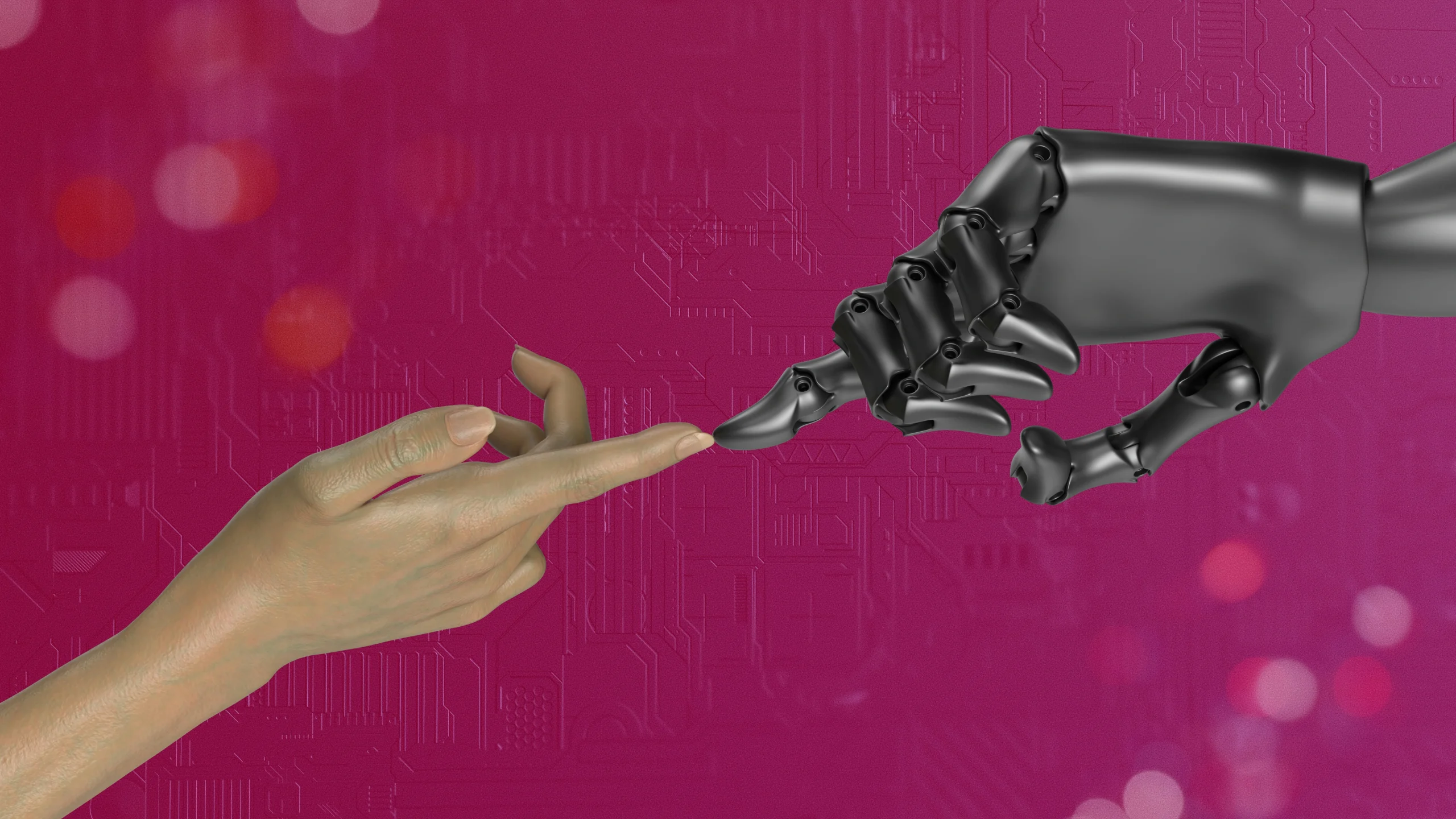
AI can track your professional footprint to confirm that those mentioned skills translate into tangible results.
This forces professionals to maintain a much more honest digital identity focused on demonstrating competence.
Traditional Recruitment vs. AI-Powered Hiring 2026
| Evaluation Criteria | Traditional Human Recruitment | AI Contracting 2026 |
| Initial Filtering | Rapid manual reading (subjective). | Deep semantic analysis (objective). |
| Skills Assessment | Based on the chemistry of the interview. | Based on microbehaviors and data. |
| Bias Detection | Prone to unconscious biases. | Audited by fairness algorithms. |
| Volume of Information | Limited to what the paper says. | It integrates networks, testing, and trajectory. |
| Closing Speed | Weeks of manual coordination. | Days through schedule optimization. |
What are the ethical risks of artificial intelligence in employment?
Despite its efficiency, the Recruitment with artificial intelligence 2026 It faces legitimate criticism regarding the opacity of the algorithmic "black box".
There is a real danger that systems will replicate historical biases if the training data is not diverse enough.
Learn more: How Artificial Intelligence Is Transforming Different Industries
There is something deeply unsettling about the possibility of being dismissed by a code that does not understand the social context behind a gap in your career.
Therefore, the new regulations require companies to provide a clear explanation of the criteria used.
Transparency has become the new gold standard for human resources departments.
Ensuring that AI acts as a co-pilot and not an infallible judge is vital to maintaining the reputation of any employer brand today.
How can candidates optimize their profile for these systems?
To stand out before the Recruitment with artificial intelligence 2026Use direct and quantifiable language. Avoid embellishments and focus on metrics that AI can process.
Read more: How to make your LinkedIn profile stand out to attract recruiters in Latin America
Do not try to trick the system with techniques such as hidden text or keyword repetition; current algorithms detect manipulation and penalize a lack of integrity.

For a detailed look at how regulations are shaping the ethical use of these systems, visit the official website of the European Commission It offers guidelines on the Artificial Intelligence Act.
These laws set the limits to protect your fundamental rights against automation.
Navigate the Recruitment with artificial intelligence 2026 It requires integrating technology as an ally.
In the end, even though algorithms do the dirty work of filtering, the human factor is still what closes the deal.
Candidates who combine a solid technical background with a coherent professional narrative will be the ones who stand out.
AI does not replace ambition, it simply provides a clearer map for talent to find its place.
Read more: How to master generative artificial intelligence (GenAI) skills to boost your career
Prepare to be evaluated by machines, but win the position by demonstrating that unique value that no code can replicate.
FAQ: Frequently Asked Questions about Recruitment and AI
Can AI read resumes with highly creative designs?
Although systems have advanced, designs with complex columns or excessive graphics can still confuse semantic analysis. A clean structure is recommended to ensure your achievements are read correctly.
What if my tone of voice is naturally monotone?
The algorithms of 2026 are trained to recognize neurotypical diversity. They don't look for emotional performance, but rather consistency between what you say and how you respond under pressure.
Is it legal for me to be evaluated by just one machine?
Most laws require human oversight in the final stage. You always have the right to request a review by a person if you believe the automated process was unfair.
How can I tell if a company is using AI to filter me?
Transparency is mandatory. Companies usually include a notice specifying whether they use automated processing tools for pre-selection.
Should I include keywords on LinkedIn so that AI can find me?
Yes, but organically. Describe your projects using industry-standard terms, as AI looks for groupings of concepts to validate your actual level of expertise.
